Front Porch Staircase Rebuild – Safer, Stronger, Built to Last
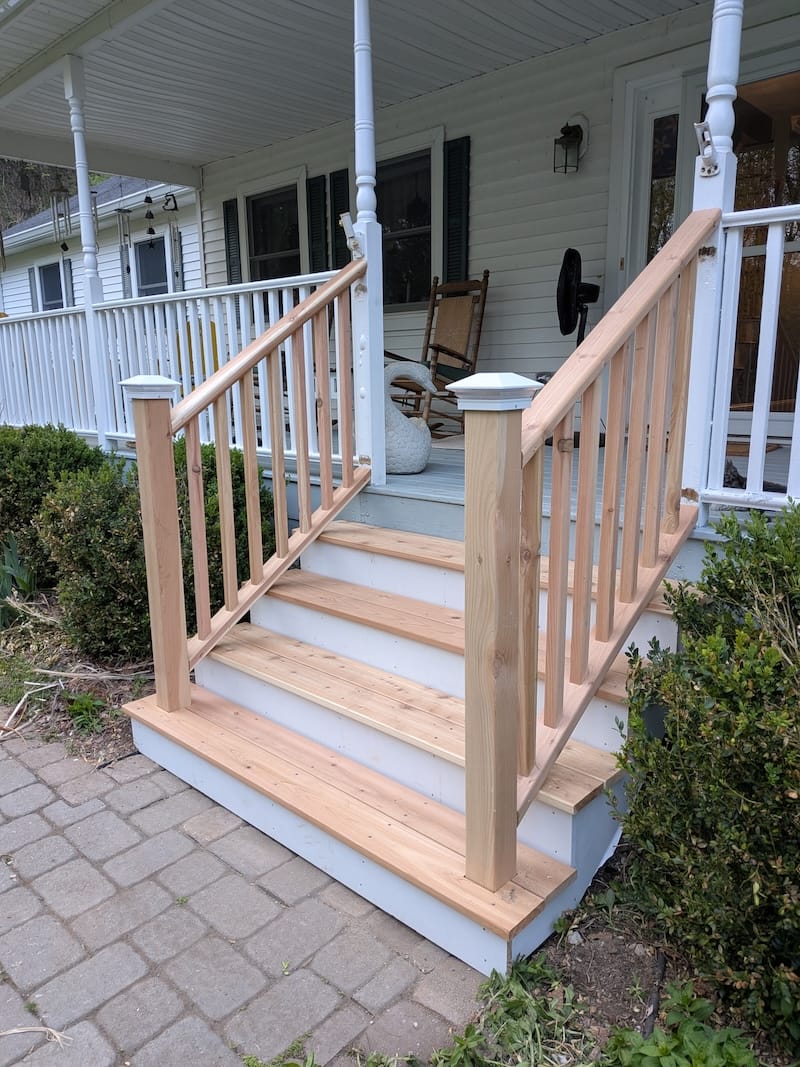
This porch staircase rebuild addressed multiple structural and safety issues, including rotting treads, loose railings, and outdated, below-code railing height. We demoed the existing stairs and rebuilt them with added stringer support for strength, cedar components for durability, and primed pine risers and trim for immediate finishing. By matching the existing porch decking and improving drainage, the new staircase not only looks cohesive but performs better in all weather conditions—delivering a safer, more solid, and long-lasting entryway.
We recently completed a full front porch staircase rebuild for a homeowner in Chester, NY. The existing steps had reached the point where patching and repainting just wasn’t cutting it anymore—and more importantly, they weren’t as safe or solid as they should be.
This project was all about rebuilding the staircase the right way, using better materials, tightening everything up structurally, and making sure it’s ready for a clean, long-lasting finish.
What Was Going Wrong
Over time, a few common issues started to show up:
Wobbly railings that didn’t feel secure when using the stairs
Rotting stair treads, even with regular paint and upkeep
Poor drainage, allowing water to sit on the treads and create slippery conditions
Inconsistent Rise, can make stairs less safe.
This porch staircase was maintained well, but had several issues making it less safe to use including loose newel posts, rotting lower decking, and a railing that was too low.
At that point, a rebuild made more sense than trying to keep repairing it.
What We Did
We demoed the existing staircase and rebuilt it from the ground up with durability and longevity in mind:
New staircase framing with added support We installed a new double header for the stairs to tie into, which we transferred into the original porch footings. We installed two additional stringers to stiffen the entire structure. The result is a much more solid, bounce-free feel underfoot.
Stringers custom cut to final rise, and tied into a new double header behind this stair ledger. We applied liquid flashing to all cut ends of the stringers before attaching them with 5" structural lag screws.
Flashing for Longevity - All stair stringers were flashed with liquid flashing at cut locations, including the rear and bottom of the stringer prior to installation. Then wrb was added to treated lumber before the Windsor One trim was applied. This is a spec required for Primed Pine fascia applications to prevent water seepage between the two materials. We also attach the risers and skirt first so we can flash the seam above the trim and framing to ensure water does not penetrate this vulnerable area.
We used a combination of liquid flashing and joist tape flashing to limit water penetration into the stringers.
Primed pine risers and trim Using primed pine also allows the homeowner to paint immediately, without waiting months for materials to dry out.
WRB on Stairs? Yes, this is an easy way to extend the life of the windsor One trim we applied and is actually a required spec to meet their warranty on exterior horizontal trim installations like this.
Cedar treads and rail components Cedar holds up well outdoors and gives a clean, high-end look while resisting rot better than standard pressure-treated decking. Using cedar also allows the homeowner to finish the deck right away rather than waiting for the wood to dry out like you have to with pressure-treated lumber.
All final surfaces are either cedar or primed pine, making this staircase paintable right away, which was an important goal for the homeowner.
Matched decking detail We tied the staircase into the existing porch by matching the 1x decking material, so it feels cohesive rather than like an add-on.
Upgraded, code-compliant railings New railings were built to proper height and spacing, eliminating the safety concerns from before. We also dropped the posts a bit below grade, added liquid flashing to them at the water line, and attached the bottom newel posts to the 2x sub riser with deck tension ties for a rock-solid railing posts. To match the existing deck guardrails, we ripped down cedar 2x4s and routed the edges to create custom balusters that matched the width of the existing deck balusters for a cohesive look.
The bottom newel post of a staircase can impact the whole feel of the staircase. It determines how solid the railing is, and is difficult to get secure using traditional hardware. Here you can see we use two 1/2" carriage bolts, with one of them tied into a deck tension tie to limit movement across the post.
Improved drainage and layout This staircase resulted in a 6.75" rise and 11.5" run making them a comfortable tread height and rise for users. It also allowed us to match the nosing depth on the decking so we stayed within the required 3/8" nosing range.
The Result
The finished staircase feels completely different:
Solid and stable underfoot
Safe, properly sized railings
Clean lines that match the porch
Ready for paint right away
Built to handle weather
It’s one of those upgrades that not only improves curb appeal, but also makes everyday use feel better and safer.
If your porch steps are starting to feel soft, wobbly, or just past their prime, it’s usually a sign that a proper rebuild will save you time and money in the long run.
Odd Job Adam Warwick, NY Decks • Stairs • Repairs • Exterior Carpentry






.jpg)
